


by Sequoia Nix
photo by Michael Olson
Nursing students raise concerns as faculty contract talks move toward mediation
“We’re nearly four months from graduation.”
For Brittnie Ross, a second-year nursing student at Lane Community College and president of the Student Nurses Association, that timeline feels heavier than usual.
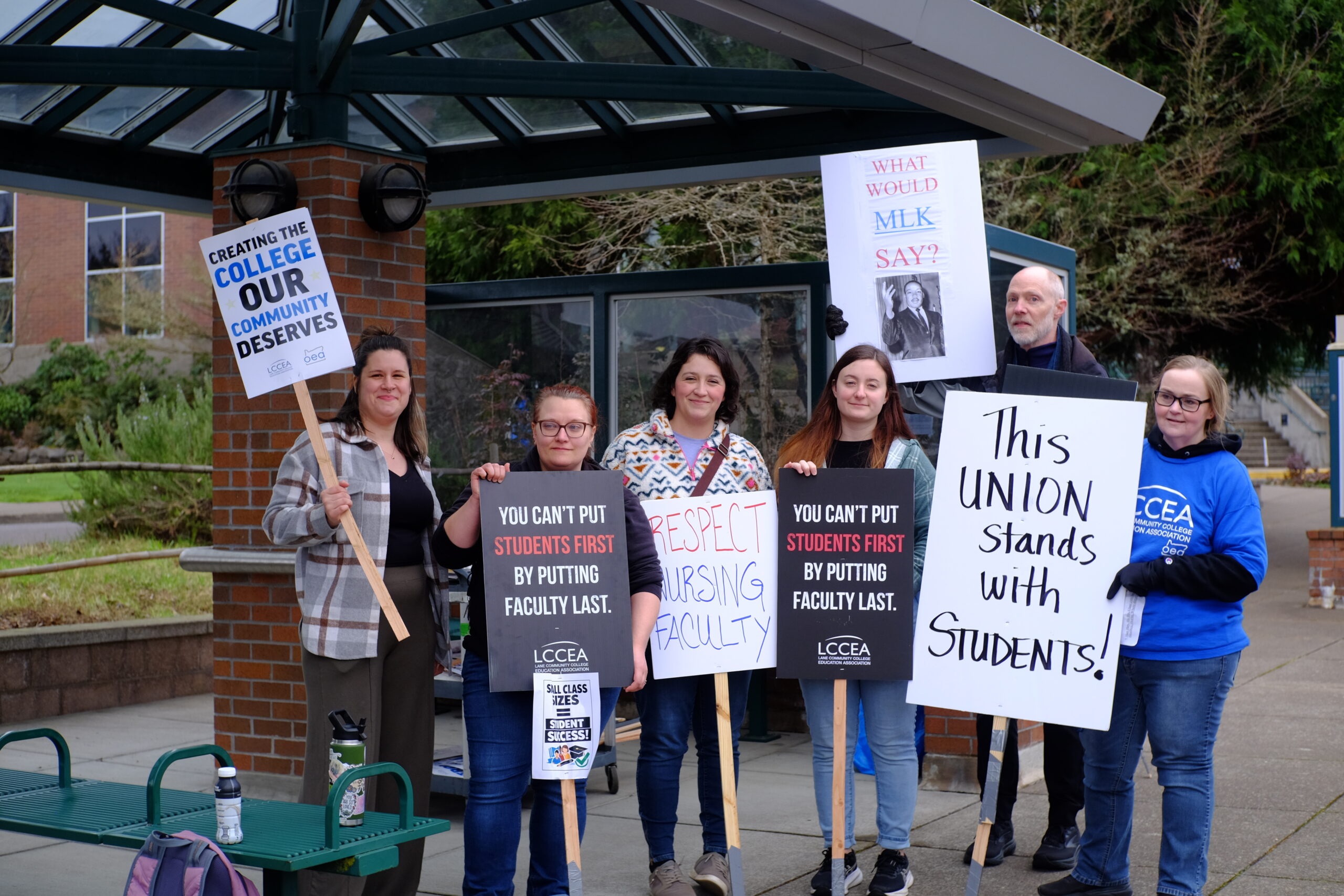
Faculty contract negotiations between LCC and the Lane Community College Education Association (LCCEA) are ongoing. While no strike has officially been declared, faculty signaled that a strike remains possible if negotiations fail. Lane officials said the college is committed to bargaining in good faith toward a contract that is fair to faculty and financially sustainable for the institution, emphasizing that whether a work stoppage occurs is ultimately the association’s decision.
In response to questions from The Torch, Senior Advisor for Strategic Communications Jenna McCulley said that said the college is not proposing changes to nursing class sizes and that its current bargaining proposal maintains “status quo” language around class sizes.
The college also stated that the campus health clinic is not a part of current faculty negotiations.
Regarding concerns about clinical hours and licensure timelines, the college said it is assessing potential impacts across programs, particularly those with clinical and certification requirements. Officials said planning efforts are focused on identifying options that protect students ability to complete required components and encourage students with concerns to contact an advisor.
“No NCLEX, no RN license,” Ross said.
Without completing required coursework and clinical hours, nursing students cannot graduate or sit for the National Council Licensure Examination — NCLEX — the exam required to become a registered nurse. The program is currently operating as scheduled, but uncertainty surrounding negotiations has left some students uneasy.
“If there’s a strike, everything is put on hold,” Ross said.
Ross spoke during public comment at the Feb. 4 Lane Board of Education meeting. A recording of the meeting shows 38 students signed up to speak. In her remarks, Ross focused not only on wages but on class size and student support.
“Our Monday class has 104 students,” she said. “And to double that?”
Ross expressed concern that increasing cohort sizes without proportional increases in faculty and support could reduce supervision in clinical components of nursing education.
“We’re learning medication safety, clinical judgment, life-saving interventions,” she said in her prepared statement. “In this type of program, supervision and mentorship are safeguards.”
Ross also shared her experience as a former IEP student who now works with the Center for Accessible Resources (CAR). She said access to faculty support and the ability to be seen as an individual student made a difference in her academic success.
“In large class sizes, it becomes easier for students to disappear,” she said. “And in nursing, struggling silently is dangerous.”
Lane’s nursing program has built a strong reputation. During her public comment, Ross noted that the program has a 93% first-time NCLEX pass rate and ranks among the top community college nursing programs in Oregon.
“None of that would be possible without our faculty,” she said.
Ross said students are following updates through board meetings, union communications, and campus messages. She said not all students fully understand the details of the negotiations, but second-year nursing students have been especially active in speaking out.
Lane previously sent a campus-wide message stating that some agreements had been reached and that mediation is scheduled. Students say they are looking for clarity about what unresolved issues remain and how potential outcomes could affect them.
Ross was clear about one point: There is no strike yet.
“The biggest thing is to not say there is a strike,” she said. “Nothing like that is in the books yet.”
While negotiations continue, students say this conversation extends beyond one program.
Lane’s nursing students are training to become the nurses who will serve Eugene and surrounding communities. Decisions about faculty workload, class size, and program stability ultimately shape the workforce pipeline and the level of care local residents receive.
“These aren’t just budget line items,” Ross said. “They’re future nurses.”
She also emphasized that faculty are members of the same community students hope to serve.
“We are pretty lucky to have such amazing faculty,” she said. “They go above and beyond for us.”
As mediation approaches and graduation draws closer, nursing students say they are paying attention. For students outside the program, the issue may feel distant, but its impact could reach far beyond campus.
Students can stay informed by attending Board of Education meetings, watching publicly available recordings, and following official updates from both the college and LCCEA.
For Ross and her classmates, the message is simple: what happens next matters, not only for their diplomas, but for the future of health care in their own community.


