Students and staff question freedom of speech during October Board of Education meeting
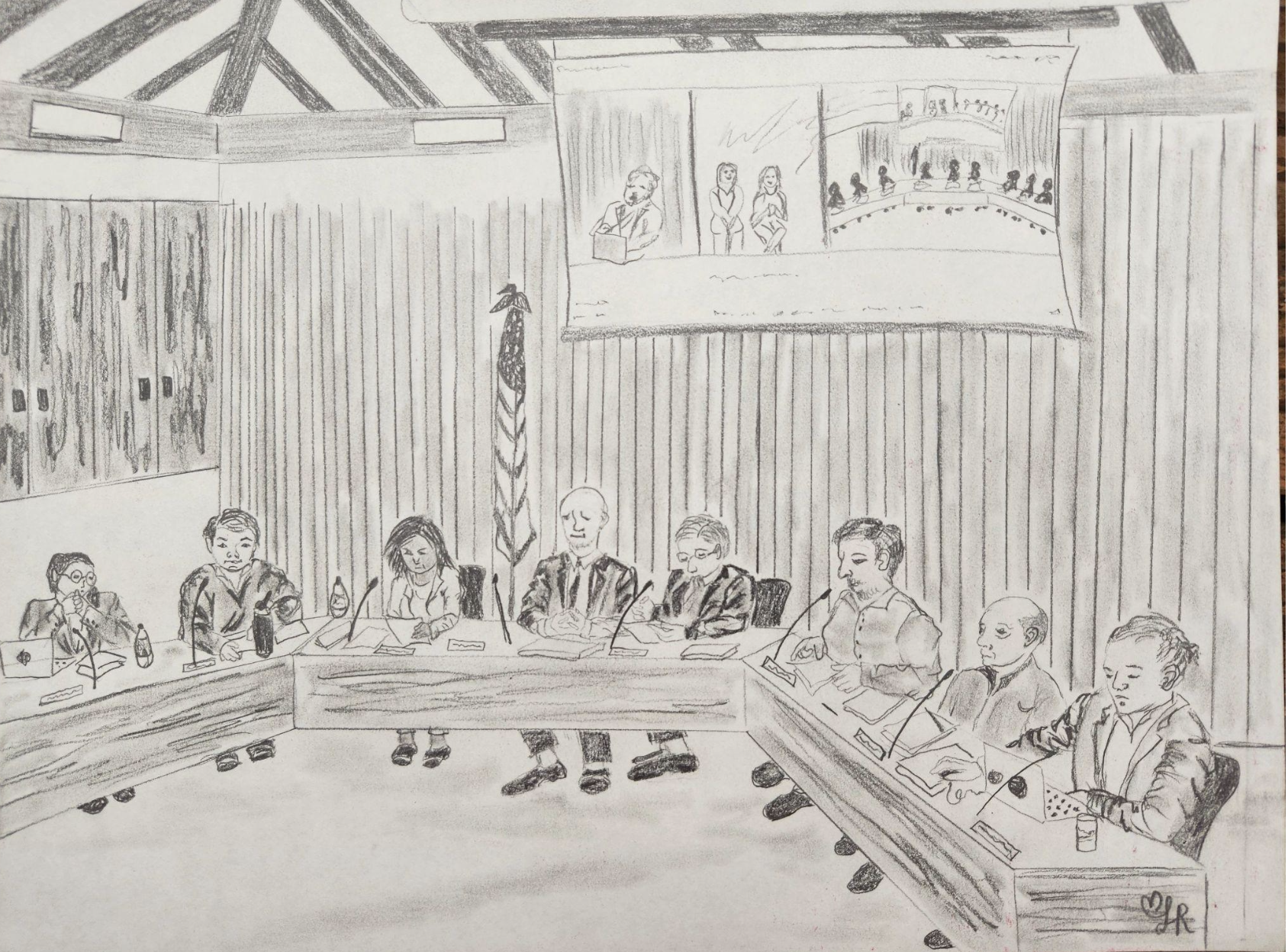
At the Oct. 7 Lane Community College Board of Education meeting, public comment shaped up to be one of the shortest public comment periods of the year at roughly 24 minutes, and it featured heavily the voices of students and staff concerned about suppression of student voices.
Following the recent attempt to ban LCC student Richard Riordan from campus for his continuous criticism of the board, freedom of speech and censorship have come into question, the commenters said.
Instructor Jim Salt, who had Riordan as a student, criticized the way in which the college prioritizes perceived threats.
“The college typically does nothing to those who make actual threats on campus … students that do physically disrupt classes typically [receive] no formal action, justified in treating it as a ‘learning opportunity’ because we’re an educational institution,” said Salt, “but expose the local power elite and you are expelled for life with no due process.”
The topic of infringement upon freedom of speech was also broached when discussing the Board’s recent decision to reduce allotted public comment time to 90 seconds if 40 or more speakers attend. Michael Olson, LCC student and former president of the Lane Student Government Association, was first to comment on this.
“You’re telling us, effectively, the students, to ‘shh’, and that we’re talking too much by bringing 40 people to a meeting,” said Olson.
The reasoning given for this decision was to allow more time for addressing items on the meeting agenda, as a particular meeting that occurred in November 2025 stretched to 11 pm as a result of an hours long public comment period. Board Trustee Zachary Mulholland reminded those concerned that this was the more favorable option in comparison to limiting overall speaking time, which would create an imbalance for those who speak last.
Lane Community College Education Association President Adrienne Mitchell and Lane Community College Employees Federation President Tami Hill also made comments on suppression from the college in their respective reports for the Board.
Board Vice Chair Jerry Rust voiced his opinion on the matter, saying he encourages public comment, and that he, along with the rest of the Board, are ‘fair game.’
He then went on to invite anybody who attended the aforementioned November 2025 meeting to prove to him that there was any disrespect displayed, as that particular meeting created high tension between Board members and attending community members. This comment was later criticized by Trustee Julie Weismann, asking him to withdraw the statement as she called it“unacceptable.”
Proposed changes to the redline document for Board Policy 2345: Public Participation at Board of Education Meetings included a proposal to verbally acknowledge those who send written testimony to the Board by announcing the number of submissions, and the names of those who made the submissions.
This proposal was questioned by Trustee Mulholland, concerned about how this would affect their attempts at streamlining their meetings by eating up meeting time. There was also a proposal to start tracking public comment and the responses given by the college or the Board.
Another item on the meeting agenda was discussing the Oregon Public Employees Retirement System (PERS) bond. Vice President of Finance & Operations Kara Flath and Director of Budget & Resource Planning Jonathon Campbell asked the Board for authorization to explore the possibility of having an additional PERS bond, as the current LCC PERS side account is approaching expiration, and further analysis would be needed before borrowing.
After discussing the costs of borrowing, potential investment risks, and pension liabilities, the Board gave Flath and Campbell the go-ahead to continue exploring the additional bond, with the promise to return to the Board for approval before fully committing to borrowing. Trustee Austin Folnagy moved to approve the resolution, with Trustee Steve Mital seconding the motion.
Before public comment took place, President Stephanie Bulger took the time to bring the outgoing Student Government Association (SGA) president Michael Olson on to the floor to thank him for his time spent dedicated to the SGA, and for his contributions to college decisions. She also welcomed the new SGA President Constantine Hadley. Olson later noted during his public comment testimony that he was not given any heads up about being honored during the meeting, and that he’d only learned via the meeting agenda that is available to the public.